Narita Airport Access
Compare the main Narita Airport routes by destination, ticket requirements, luggage and the departure available after arrivals.
Quick links
36 min: Skyliner to Nippori (fastest)
¥1,290: T2·3 → Asakusa by Access Express (ticket)
Check times: Add waiting, transfers and the hotel walk
Start with the station or bus stop closest to your hotel, then compare departures after you expect to clear arrivals. Skyliner serves Nippori and Keisei-Ueno, N’EX offers selected direct journeys to major JR stations, and unreserved Keisei trains and airport buses offer other price and route choices.
This guide compares the principal options. The fastest advertised train time covers one rail segment, while your arrival journey also includes immigration, luggage collection, waiting, transfers and the final walk.
Best for: First-time visitors figuring out how to get from Narita to Tokyo, budget travelers comparing costs, and anyone who wants to compare the main options before landing.
The main airport options
Check the terminal and final destination before choosing N’EX, Skyliner, Access Express, or a bus.
Confirm your terminal first
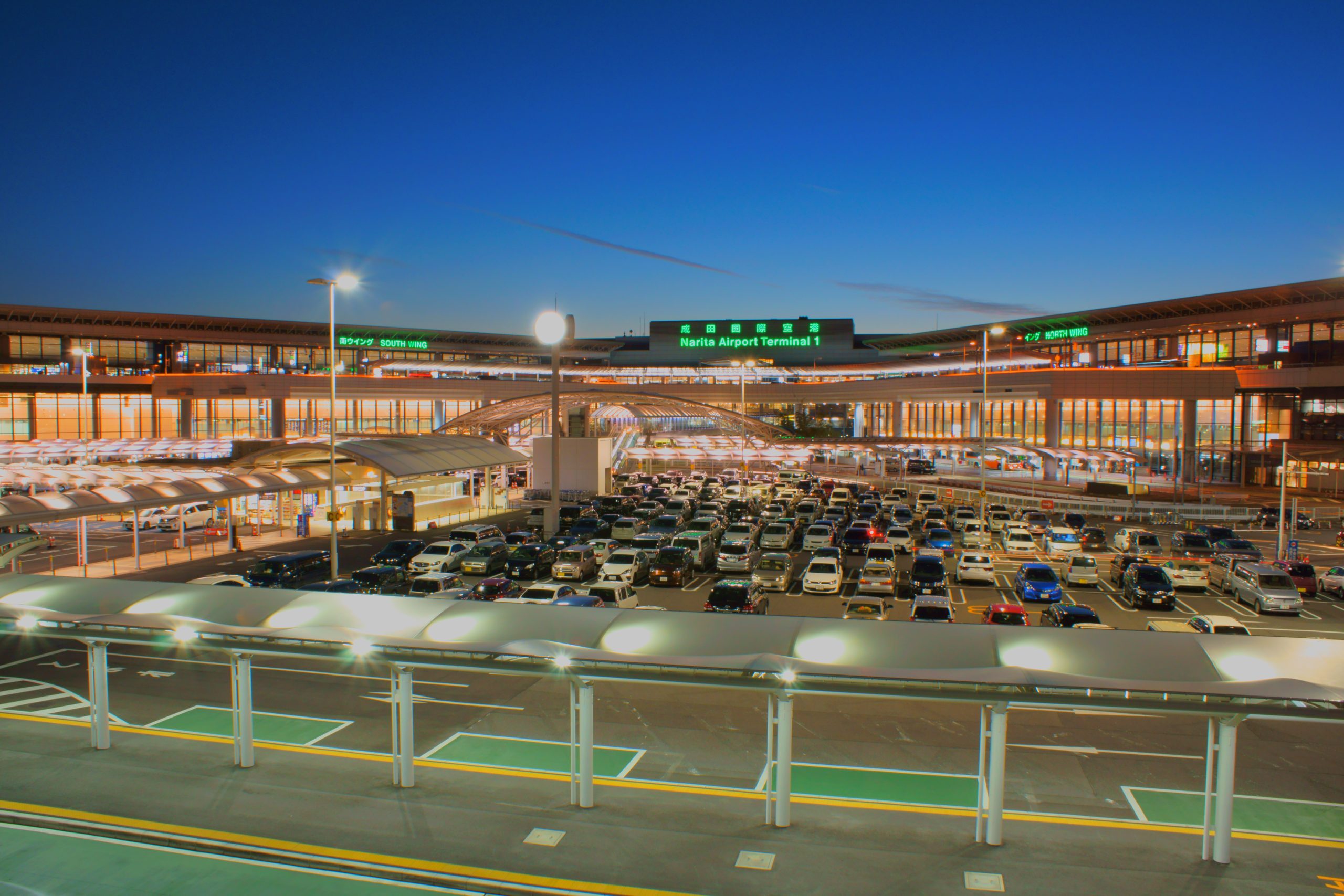
Check your airline and flight ticket. Terminal 1 has Narita Airport Station; Terminal 2 uses Airport Terminal 2·3 Station. From Terminal 3, reach Airport Terminal 2·3 Station by walking or taking the terminal shuttle toward Terminal 2.
The airport quotes about 13 minutes between Airport Terminal 2·3 Station and the T3 information counter, with additional walking inside the buildings. The T3–T2 shuttle ride is about three minutes, plus waiting and walks. Check the airport’s current terminal transfer instructions and allow for luggage and mobility needs.
All Routes at a Glance
| Option | Running-time basis | Example adult fare and scope | Useful when |
|---|---|---|---|
| Skyliner | Fastest 36 min → Nippori / 41 min → Keisei-Ueno | ¥2,580 standard ticket total; ¥2,567 IC total | Reserved express for eastern Tokyo; allow onward station walks and transfers |
| Narita Express (N’EX) | Check the chosen departure and destination; allow additional waiting and hotel walking time | ¥3,140 to Tokyo; ¥3,330 to Shinagawa, Shibuya or Shinjuku; eligible return product ¥5,200 | Direct departures to Tokyo, Shinagawa, Shibuya and Shinjuku. Ikebukuro requires a connection. |
| Access Express (Keisei) | Destination and departure dependent; some trains run through to the Toei Asakusa Line | Example T2·3 → Asakusa: ¥1,290 ticket / ¥1,276 IC | Lower-cost, unreserved option where the actual train destination fits; some journeys need a connection |
| Airport Limousine Bus | Route timetable plus traffic margin | Shinjuku example: ¥3,600 adult one-way; other routes differ | Convenient when the hotel or nearby stop is served by a current departure |
| AIRPORT BUS TYO-NRT | Check the terminal-specific timetable and allow for road traffic. | Regular adult one-way ¥1,500; designated early-morning/late-night services ¥3,000. | The actual Tokyo Station or Ginza stop fits your hotel route; check baggage and ticket procedures. |
| Prebooked private transfer | Operator, hotel location, traffic and pickup arrangement dependent | Obtain a written quote from the chosen operator | Confirm pickup terminal, waiting policy, luggage capacity, cancellation terms, tolls and night charges |
| Taxi | Destination and traffic dependent | Official Shinjuku zone examples: ¥31,500 / ¥32,500 by route; tolls and applicable night charges extra See Narita Airport’s fixed-fare zones and conditions. | Door-to-door option. Match passengers and luggage to vehicle capacity and confirm the total. |
Choose a route for your hotel area
Use the fare overview above, then compare the complete journey from your terminal to the actual property. These are starting points for a route search, not rankings that apply to every departure.
| Hotel area | Routes to compare | Connection or final-stop check |
|---|---|---|
| Shinjuku or Shibuya | A direct N’EX departure; Skyliner plus JR via Nippori; a verified hotel bus stop. | Compare the available departure, transfer walk and hotel entrance. |
| Ikebukuro | Skyliner plus JR via Nippori; N’EX plus JR via Shinjuku; current airport bus options. | N’EX is not direct. Check any bus’s actual Ikebukuro stop and ticket conditions. |
| Tokyo Station / Marunouchi | N’EX or AIRPORT BUS TYO-NRT. | Rail platform and bus stop are different arrival points; include the walk to your hotel. |
| Ueno | Skyliner to Keisei-Ueno; compare Keisei Main Line for a lower-fare itinerary. | Keisei-Ueno is separate from JR and Metro Ueno. |
| Asakusa | A suitable Access Express through train; Skyliner to Keisei-Ueno plus Metro. | Compare the direct departure with the Ueno walk and connection. Skyliner’s fastest rail segment does not make it the fastest hotel route. |
| Akihabara | Skyliner to Nippori plus a suitable JR service. | Include JR waiting time, fare and the hotel-side exit. |
| Ginza | A suitable Access Express to Higashi-Ginza; an airport bus serving the required Ginza stop. | Higashi-Ginza, Ginza Station and the bus stop are different arrival points. |
| Nihonbashi | A suitable Access Express/Asakusa Line through departure. | Confirm it calls at Nihonbashi and use the hotel’s recommended exit. |
| Shinagawa | A direct N’EX departure; compare any suitable Keisei/Toei/Keikyu itinerary. | Confirm the selected train reaches Shinagawa and stops there. |
| Roppongi | Compare complete rail itineraries to the station specified by the hotel. | One N’EX option uses Tokyo → Marunouchi Line to Ginza → Hibiya Line to Roppongi. This has two rail transfers; Tokyo Station has no Hibiya Line. |
| Odaiba | A bus serving the exact hotel/nearby stop, or a complete rail itinerary. | Confirm the final station or stop; “Odaiba” covers several arrival points. |
With an already valid Japan Rail Pass, include eligible N’EX travel in the comparison, but still check the departure and hotel connection. For a group, compare the full public-transport cost with a written taxi or transfer quote. Three or four passengers alone do not establish that a taxi is the best choice.
Skyliner(スカイライナー)
The fastest Keisei airport train into eastern Tokyo. The Skyliner takes as little as 36 minutes to Nippori and 41 minutes to Keisei-Ueno. Those are fastest train-running times, not arrival-hall-to-hotel times: add immigration, the terminal walk, waiting, and any onward transfer.
How It Works
From Terminal 1 or Terminal 2, follow signs to the Keisei Skyliner platform. If you arrive at Terminal 3, first walk or take the terminal shuttle toward Terminal 2, then follow the signs for Airport Terminal 2·3 Station and the Keisei Skyliner.
Buy the reserved Skyliner ticket at the counter, machine, or an approved online channel. An IC card can pay the base fare, but a separate limited-express ticket is still required.
Check the train, car and assigned seat, and be at the boarding area before departure.
Fastest running times are 36 minutes to Nippori and 41 minutes to Keisei-Ueno; check the specific departure.
Where Skyliner fits
Skyliner is a reserved-seat option for Nippori or Keisei-Ueno and suitable onward journeys. Use the hotel-area table above to compare the full route. The short airport segment is most useful when the connection and final walk also suit your destination.
Keisei offers combinations with a Tokyo Subway 24-, 48- or 72-hour ticket. Compare the current package conditions with the subway trips you actually plan; the subway portion does not cover every railway in Tokyo.
Price
- Standard adult one-way: ¥2,580 using ordinary tickets; ¥2,567 when an IC card pays the base fare. Both totals include the express charge.
- Foreign-visitor offer: ¥2,310 one-way or ¥4,500 round-trip under the current purchase and eligibility conditions. Check the validity and permitted channel before buying.
- Skyliner + Tokyo Subway Ticket: check the current combinations; prices and conditions differ from a standalone Skyliner fare.
For Skyliner, an IC card pays only the base-fare part: the published ¥2,567 IC total comprises ¥1,267 base fare plus ¥1,300 express charge. Buy the express ticket before boarding and follow Keisei’s IC-card instructions.
Direct to west-side hubsNarita Express / N’EX(成田エクスプレス)
JR East’s Narita Express runs directly to Tokyo Station, Shinagawa, Shibuya, and Shinjuku. Check the destination of the specific departure: the network also extends beyond these stations. N’EX does not currently provide a direct Ikebukuro service; compare a connection via Shinjuku with Skyliner via Nippori for that destination.
N’EX changes for November 6 to 8, 2026
JR East lists these changes for tunnel work. The airport–Tokyo section continues to operate.
| Date | Affected services |
|---|---|
| November 6 | Airport departures 46, 48, 50, 52 and 54 terminate at Tokyo. |
| November 7 | N’EX operates between the airport and Tokyo. The Tokyo–Shinjuku and Tokyo–Ofuna sections are suspended. |
| November 8 | No. 1 starts at Tokyo. Nos. 3, 5 and 7 start at Shinjuku, with an extra Shinagawa stop; their Ofuna–Tokyo sections are suspended. |
Check JR East’s dated train list before reserving. If your train ends at Tokyo, plan an onward connection. On November 7, Yokosuka/Sobu Rapid is also suspended between Tokyo and Shinagawa; choose an operating route in the journey planner.
How It Works
Follow signs to the JR platform in the airport basement
Buy a ticket at the JR East Travel Service Center (staffed, English-friendly) or use the ticket machines
All seats are reserved. Use the designated luggage areas and keep aisles clear; confirm arrangements for unusually large items.
Confirm the destination, then use the direct service to Tokyo, Shinagawa, Shibuya, or Shinjuku. For Ikebukuro, plan an onward connection.
When to Use N’EX
- Your hotel is near Tokyo Station, Shinagawa, Shibuya, or Shinjuku, and a direct departure suits your arrival time.
- You prefer fewer transfers to one of the JR stations directly served by the departure you choose.
- Your Japan Rail Pass is already valid on the travel date and covers N’EX; reserve the seat before boarding.
When NOT to Use N’EX
- For Ueno, compare Skyliner’s direct route and standard fare with N’EX plus an onward connection.
- You prefer a lower fare and can use an unreserved Access Express or Keisei Main Line train; check the destination-specific total.
Price and return-ticket conditions
The adult Ordinary one-way examples are ¥3,140 to Tokyo and ¥3,330 to Shinagawa, Shibuya or Shinjuku. Check JR East’s fare and product page for the selected journey.
The N’EX TOKYO Round Trip Ticket is ¥5,200 with a 14-day validity period, for travelers holding a non-Japanese passport, subject to JR East’s eligibility and coverage terms. Compare it with two applicable one-way tickets. It will not suit every trip—for example, if you leave from Haneda, return after the validity period, or already hold a pass covering both journeys.
An already valid national Japan Rail Pass can cover N’EX, including the reserved seat. Reserve the departure before boarding. Do not buy or start a national pass solely because N’EX is included; compare the pass price and conditions with your full itinerary.
Access Express / Keisei Line(アクセス特急 / 京成線)
Access Express uses the Narita Sky Access route and has no limited-express surcharge or seat reservation. Some departures continue through onto the Toei Asakusa Line toward Asakusa, Nihonbashi, and Higashi-Ginza. Other destinations require a connection; an Aoto transfer is not universal. Check the departure board, train destination, and current route finder. It can cost less than the reserved airport expresses, but Keisei Main Line trains may be cheaper for some journeys.
When to Use Access Express
- You’re on a budget and the Access Express can cost less than Skyliner or N’EX
- Your hotel is near an Asakusa Line station (Asakusa, Nihonbashi, Shinbashi, etc.)
- You accept unreserved seating and a destination-specific journey time; allow extra time if the available departure requires a connection.
How It Works
- Go to the Keisei platform (same area as Skyliner)
- Use an ordinary ticket or supported IC card for Access Express. No reserved limited-express ticket is required for this service.
- Board. Seats are unreserved — first come, first served
- Some trains run through directly to the Toei Asakusa Line, so you may not even need to transfer
Watch the train type: Narita Sky Access / Access Express and Keisei Main Line trains use different routes and fares. Read the destination as well as the service name, then check whether that departure runs through or requires a transfer. The official Access Express guide and Keisei FAQ explain the choices. Do not assume the cheapest train is the fastest or that every train serves your station directly.
Price
Example: Airport Terminal 2·3 to Asakusa is ¥1,290 by ordinary ticket or ¥1,276 by IC on the published route. Other terminal/destination combinations differ; use the official Asakusa route guide and current fare finder.
Payment: use a supported IC card or buy an ordinary ticket with the payment method accepted by the machine or counter.
Also compare the Keisei Main Line
Keisei Main Line Rapid Limited Express and Limited Express trains use a different route from Access Express. The operator’s comparison explains that the main-line option can cost less while taking longer. Read the actual destination and stopping list, then compare the complete fare and journey time. Do not buy a Skyliner ticket merely because another Keisei service also uses the words “Limited Express.”
Check the exact bus stop
Airport Limousine Bus(リムジンバス)
An Airport Limousine Bus avoids rail-platform transfers when the current route stops at your hotel or a useful nearby station. Reserve the correct route and terminal, check the stop name, and allow traffic margin. A hotel name in a general route list does not guarantee a departure at your arrival time, a direct stop at every property, or space for any quantity of luggage.
When to Use the Bus
You have heavy luggage and don’t want to deal with train stairs and transfers
Your hotel or a convenient nearby stop appears in the current destination timetable; confirm the final walk before choosing the bus.
The selected coach’s boarding steps, seating and luggage arrangements suit everyone in your party.
A bus departure for your actual destination still operates after you clear arrivals. Check it before relying on a late service.
When NOT to Use the Bus
- You must arrive by a fixed time: highway congestion, incidents, and weather can add unpredictable delay.
- Your trip overlaps a busy road period. Do not assume weekends or a particular clock time will always be clear.
Price
Route example: Narita to Shinjuku is ¥3,600 adult one-way on the published Shinjuku route. Other destinations and products differ.
Return and discounted products: check the current route-specific offer and eligibility. Do not assume that a price for another route applies to yours.
Booking:Limousine Bus — online reservation & timetable
AIRPORT BUS TYO-NRT: Tokyo Station and Ginza
This is a separate service from the hotel-oriented Airport Limousine Bus routes. The official boarding guide, checked on 26 October 2026, lists a regular adult fare of ¥1,500 and ¥3,000 for designated early-morning/late-night services.
For Narita departures, the normal procedure is to buy a ticket for a specific bus at the terminal counter, then choose an unassigned seat. The final airport departure has a different on-board payment procedure. Check the current instructions, the terminal’s stop, baggage allowance and the destination timetable. A Tokyo Station or Ginza stop does not provide a hotel-lobby arrival.
Plan luggage handling
Luggage and accessibility: compare the whole route
A reserved seat or luggage rack does not remove the need to move bags between platforms and the hotel. Choose by the baggage you can handle and the actual route, rather than a fixed rule based only on suitcase count.
- A train journey: check luggage space, any transfer, lifts and the final walk. With a large suitcase, confirm that you can handle each part of the route; a reserved seat alone is not an accessibility guarantee.
- An airport bus: confirm the exact stop and the operator’s baggage allowance. Stroller, wheelchair, oversized or extra-bag arrangements can differ by vehicle and service.
- A taxi or private transfer: state passenger numbers, bag sizes and mobility needs before booking. Obtain the total including applicable tolls and night charges, and confirm capacity and pickup/waiting conditions.
- A wheelchair-accessible journey: compare a verified step-free rail route with a confirmed accessible bus or taxi. Airport Limousine lift-equipped vehicles need advance arrangements, normally at least the previous day; confirm the route, vehicle and assistance in the operator guidelines.
For luggage forwarding, confirm the operator, service area, hotel acceptance, bag size, counter deadline, price and promised delivery date before handing over a bag. Keep medication, documents, valuables and first-night essentials with you. See our airport luggage-delivery guide for that separate decision.
Late arrivals and the return flight
After a late landing, check the Skyliner timetable, N’EX timetable and destination-specific buses for the actual date. Allow time to clear arrivals and reach the platform or stop. The last useful departure is the one that completes the journey to your hotel, including any connection.
If public transport no longer fits, compare an airport-area overnight stay with a quoted taxi or prebooked transfer. Check tolls, late-night charges and the pickup arrangement. For the return flight, work backward from the airline’s check-in or bag-drop deadline and include the full terminal journey. Road congestion, incidents and weather can affect a bus on any day, so treat its timetable as a plan, not an arrival guarantee.
Prepare tickets and navigation
Practical Info
Before leaving the airport, keep the hotel address, final station or stop, required tickets and an offline route copy accessible.
SIM/eSIM: Arrange mobile data before leaving the airport if you need live route searches, ticket links, or hotel navigation. Check your phone’s compatibility and the chosen plan’s activation instructions.
IC card: A supported Suica/Pasmo can cover many local rail journeys. Skyliner still needs its express ticket, and N’EX needs the correct reserved ticket or eligible pass. Check current airport sales options before relying on a particular card being available.
For airport options, compare this route with our Haneda Airport access guide and use our station navigation guide for transfers.
Is the Skyliner worth it over the Access Express?
Choose Skyliner when its reserved seat and quick ride to Nippori or Keisei-Ueno fit your hotel route. Choose Access Express when an available through-service fits your Asakusa Line destination and you prefer the lower fare. They are not interchangeable routes, and a fixed 20–25-minute saving does not apply to every destination or departure. Compare the whole journey, including the onward connection and walk.
Should I buy the N'EX round-trip ticket?
The N'EX Tokyo Round Trip Ticket is ¥5,200 and valid for 14 days under JR East's published conditions. It can cost less than two eligible standard one-way journeys. The offer is for visitors holding a non-Japanese passport; check the eligible area, purchase rules, and return date on the official ticket page. If you leave from Haneda, return outside its validity, or already have a valid pass covering both trips, compare other options.
What if I arrive after the last train?
Check the current Skyliner timetable, N'EX timetable, and the bus timetable for your exact destination. There is no single 21:30 or 21:40 cutoff that applies to all airport trains. Allow time to clear arrivals and reach the platform; a late landing is not a late train connection. If public transport no longer works, compare an airport-area overnight stay with a quoted taxi or prebooked transfer, including tolls and night charges.
Can I use Suica/Pasmo on the Skyliner?
An IC card can pay the Skyliner's base fare, but it does not replace the separate reserved limited-express ticket. The published adult IC total is ¥2,567 (¥1,267 base fare plus ¥1,300 express charge), while the standard ticket total is ¥2,580. Buy the express ticket before boarding and follow the official IC-card instructions. Access Express has no separate express surcharge.
Is the bus reliable in terms of timing?
Highway congestion, incidents, and weather can change a bus journey on weekdays or weekends. Treat the timetable as a planned running time, not a guarantee of arrival at your hotel. If you must catch a booked onward train or meet a fixed deadline, build a substantial margin or compare rail. For your return flight, follow the airline's check-in deadline and allow for the full terminal journey.
Explore More Tokyo Guides
For neighborhood-specific tips on where to stay and what else to explore nearby: